Traveling with Cigars from the U.S. to Canada: 7 Important Rules to Know
You can carry cigars from the U.S. into Canada, but there’s a 50 cigar duty-free limit, a 48 hour rule, and one declaration step you can’t skip. Get those right and the border is easy.
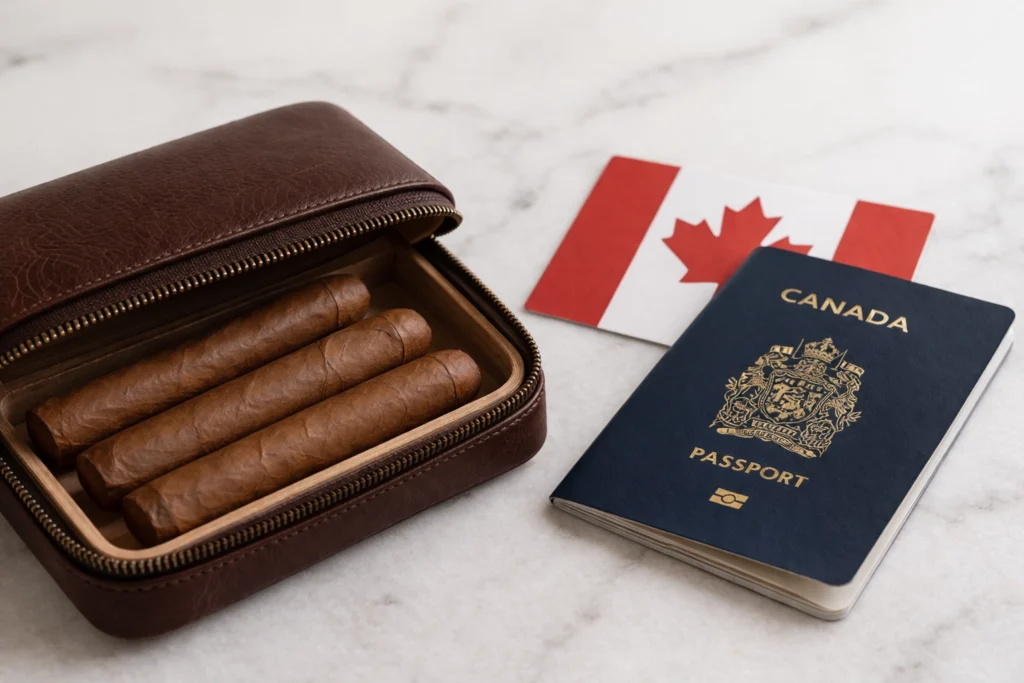
Bringing cigars from the U.S. into Canada is allowed. It just comes with limits and taxes that most people overlook. Leaving the States is the simple part. Entering Canada is where the rules actually matter, and that’s where folks get tripped up.
Stay within the 50 cigar exemption, declare what you’ve got, and pack them right, and the whole thing is painless. Ignore the rules and you’re looking at unexpected costs or confiscated cigars. Here’s what to know.
Leaving the United States
There are no restrictions on taking cigars out of the United States for personal travel. You can pack them in carry-on or checked luggage, though we’d point you toward carry-on to avoid damage and keep conditions steady. Standard airport security rules apply, and cigars are permitted.
- Cigar cutters usually pass inspection, but may get a closer look depending on the blade type.
- Soft flame lighters are allowed in carry-on bags.
- Torch lighters are typically prohibited.
Entering Canada: the duty-free limit
To qualify for duty-free entry, you need to clear two requirements:
- Be out of Canada for at least 48 hours.
- Be of legal age in the province you’re entering.
The duty-free allowance for cigars is up to 50 cigars. Bring more than 50 and the excess is subject to duties and taxes. And if you’re away for less than 48 hours, there’s no duty-free exemption at all.
Declaration is mandatory
All cigars must be declared when entering Canada, no matter the quantity. This is the one step you don’t skip. Fail to declare and you’re risking seizure, fines, penalties, or extra scrutiny on future trips.
Declaring doesn’t mean you’ll automatically owe duties. It just lets the border officer decide whether any apply.
Carry-on vs. checked bags
For international travel, carry-on is the way to go. Here’s why:
- Better temperature and humidity stability.
- Less risk of damage.
- Easier to handle if your bag gets inspected.
Checked luggage exposes cigars to rough handling and big swings in temperature and humidity. If you have to check them, use a hard travel humidor.
Packaging and appearance matter
Bringing cigars in their original boxes or packaging helps show they’re for personal use. Loose cigars are still allowed, but organized packaging makes inspection go smoother. If you’re carrying a very large quantity, be ready to explain it and pay duty.
Returning to the United States
Standard U.S. customs rules apply on the way back. Small personal quantities usually aren’t a problem, but declare everything anyway.
Common mistakes to avoid
- Not declaring cigars at the border. This is the most common and most costly mistake.
- Assuming the 50 cigar exemption always applies. It depends on how long you were outside Canada.
- Packing cigars unprotected, which leads to damage.
- Carrying prohibited lighters, which get confiscated.
Bottom line
You can bring cigars from the U.S. into Canada without any issue, but limits and taxes apply. Stay within the 50 cigar exemption if you can, declare everything, and store your cigars properly while you travel. Do that and it’s a simple, predictable trip.
Rules and limits can change, so confirm the current allowances with the Canada Border Services Agency before you travel.