Cigar Shapes Explained: Parejo, Figurado, and More
Most cigars fall into two shape families: straight sided parejos and shaped figurados. The difference changes how you cut, light, and experience the cigar.
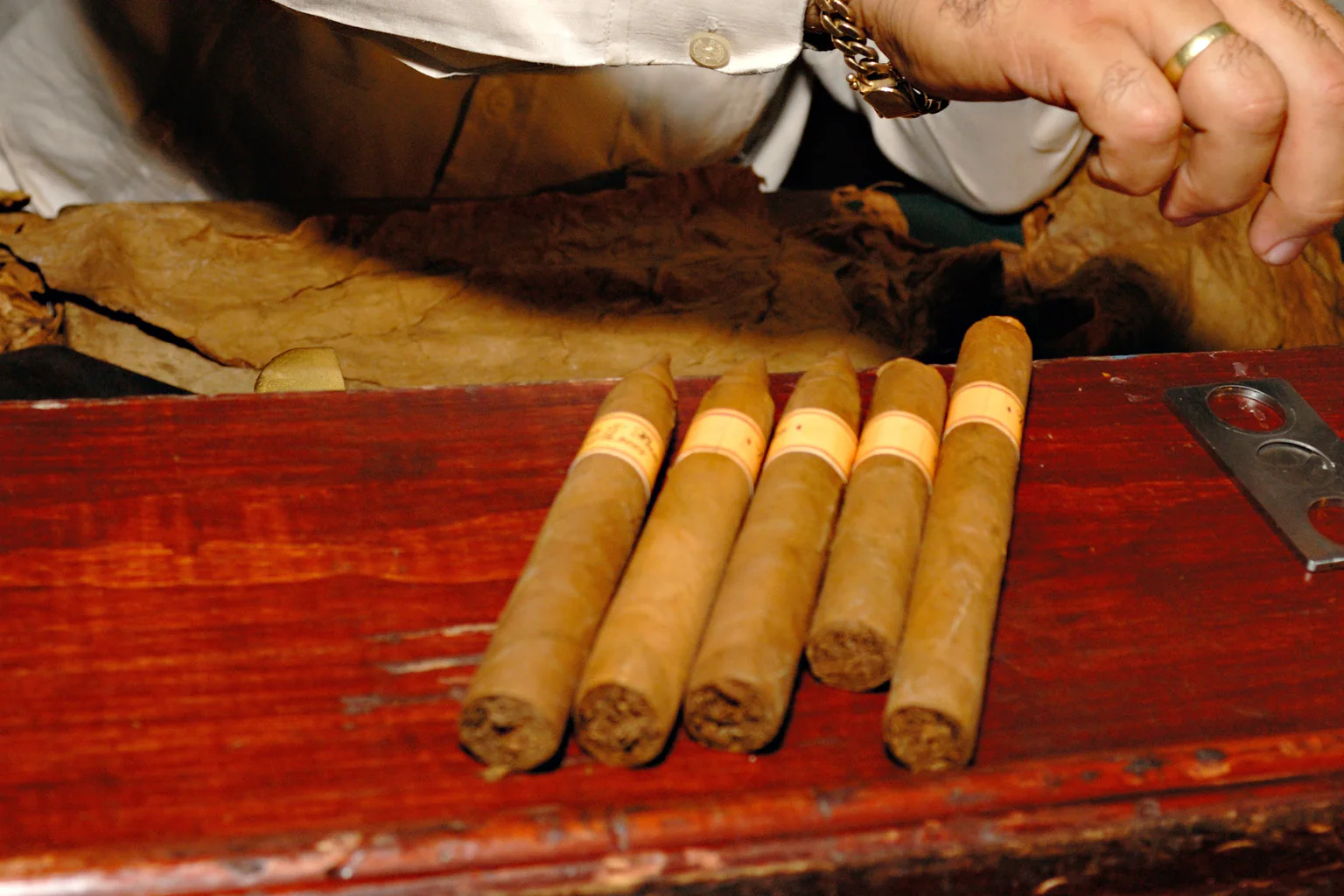
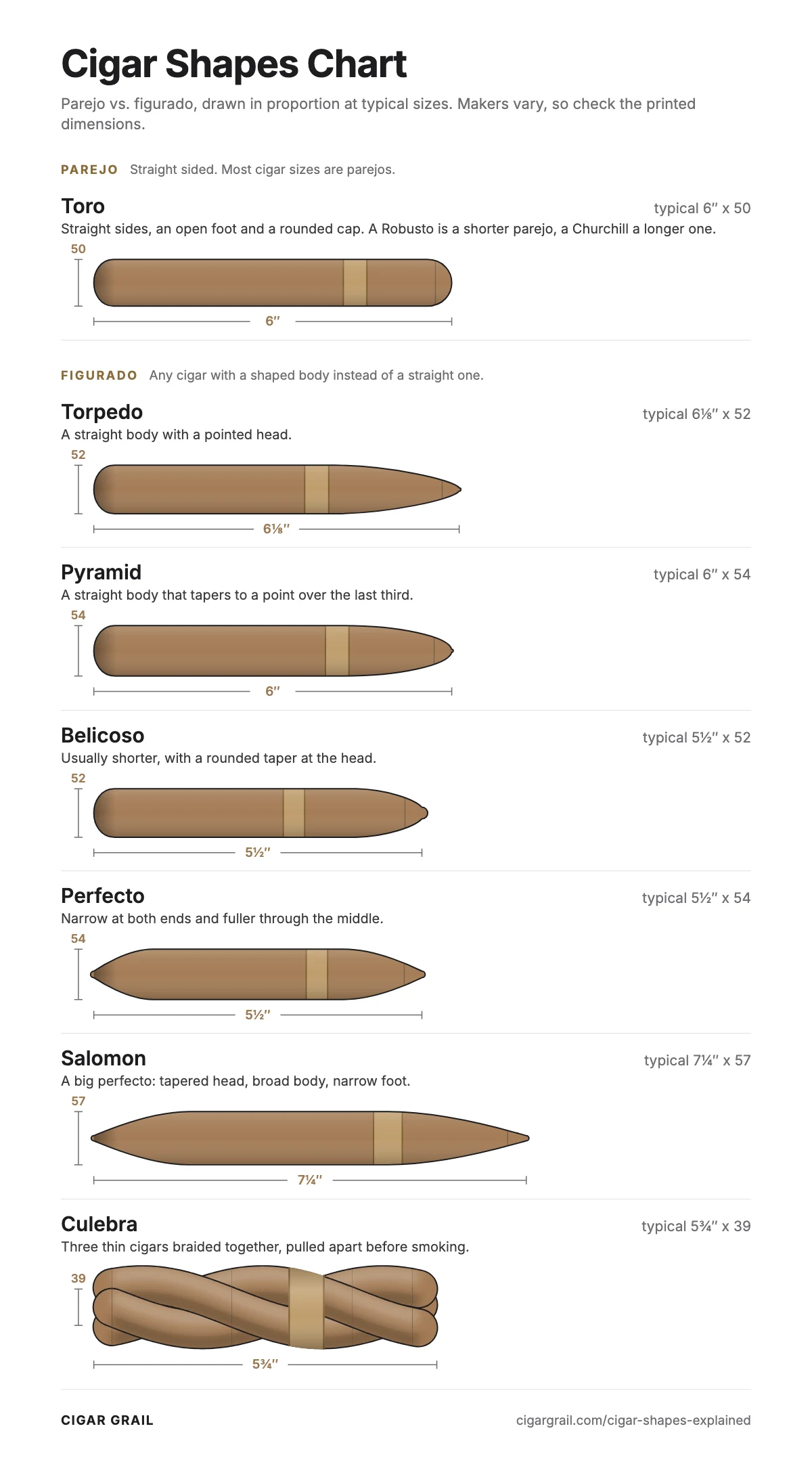
Cigar shapes explained simply: a parejo has straight sides, an open foot, and a rounded capped head. A figurado departs from that basic cylinder with a tapered head, tapered foot, wider middle, or another deliberate contour. Shape isn’t the same as size, strength, or quality.
The easiest way to avoid confusion is to separate the shape family from the size name. A Robusto, Toro, and Churchill are usually parejos with different dimensions. A Torpedo, Perfecto, and Salomon are figurados because their bodies are shaped.
Cigar shapes chart
Parejo vs. figurado at a glance
| Feature | Parejo | Figurado |
|---|---|---|
| Body | Straight and cylindrical | Tapered, pointed, curved, or wider in sections |
| Head | Usually rounded and capped | May be pointed or tapered |
| Foot | Usually flat and open | May be narrow, tapered, or closed |
| Cut | One shallow straight cut usually works | Start small and enlarge only if needed |
| Light | Toast the full flat foot evenly | A narrow foot may need a more controlled light |
What is a parejo cigar?
A parejo is the familiar straight sided cigar. Its ring gauge remains consistent along most of the body. The foot is open for lighting, and the head is closed with a cap that must be cut before smoking.
Most common size names describe parejos. Corona, Robusto, Toro, Churchill, Lancero, Lonsdale, and Gordo usually tell you the approximate combination of length and ring gauge, not a different construction family.
Those names aren’t universal measurements. One maker can call a 6 × 50 cigar a Toro while another uses 6 × 52. Check the printed dimensions when the exact size matters. Our cigar size chart puts every common size side by side, while the ring gauge guide explains the second number.
What is a figurado cigar?
A figurado is any cigar whose body isn’t the standard straight parejo shape. The term covers several designs, from a simple tapered head to a cigar that narrows at both ends and widens through the middle.
Figurados require additional rolling skill because the bunch, binder, and wrapper must follow a changing diameter without creating tight spots or loose sections. The shape can also change airflow and the proportions of burning tobacco as the cigar progresses.
Common figurado shapes
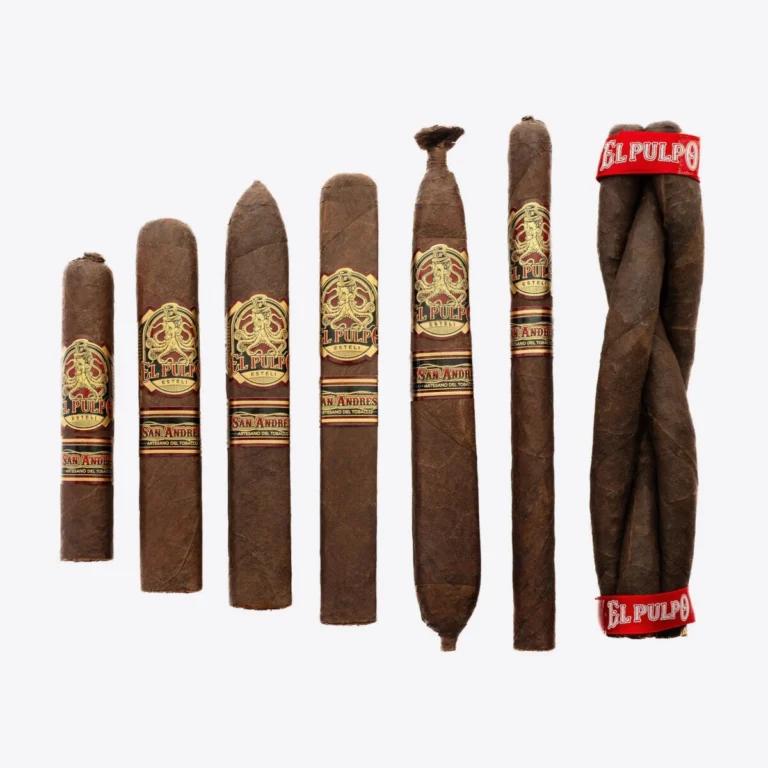
Torpedo. A straight or nearly straight body with a pointed, tapered head. The narrow head lets you control the opening by starting with a small cut.
Pyramid. A straight body that tapers to a pointed head over roughly the last third. A few, like the Padrón 1964 Pyramide, taper along the whole length. Makers use Pyramid and Torpedo loosely, so the two often look alike.
Belicoso. Usually a shorter cigar with a rounded taper at the head. Makers don’t use Torpedo, Pyramid, and Belicoso with perfect consistency, so the cigar’s actual dimensions and profile are more dependable than the name alone.
Perfecto. A cigar that narrows at both ends and carries more width through the middle. Some have a nearly closed foot, which starts with a small ember and opens into the fuller body.
Salomon. A large, dramatic perfecto style shape with a tapered head, broad body, and narrow foot. It’s usually a long smoking commitment.
Culebra. Several thin cigars twisted together into a braid. The cigars are separated before smoking. It’s unusual, but each strand is still a complete cigar.
Does cigar shape change the flavor?
It can. A changing diameter alters how much tobacco burns at different points. A narrow foot begins with a small ember and less filler burning at once. As a perfecto or pyramid widens, more of the blend enters the burn. A tapered head can also concentrate the smoke at the draw opening.
That doesn’t make one shape automatically stronger or better. The blend still determines the tobacco character and nicotine impact. Construction and smoking pace matter just as much as the outline.
How to cut a Torpedo or tapered cigar
- Find the tapered head, which is the end that goes in your mouth.
- Remove only a small amount from the tip with a sharp cutter.
- Test the draw before cutting more.
- If the draw is too restricted, make another shallow cut.
- Stop before reaching the cigar’s shoulder or main body.
A large first cut can’t be undone and may remove too much wrapper. Starting small gives you control over the opening and preserves the structure. See our complete guide on how to cut a cigar for straight cuts, V cuts, and punch cuts.
How to light a shaped cigar
A parejo has a flat open foot, so the goal is to toast the full circle evenly. A figurado with a narrow or partly closed foot needs a smaller, controlled flame. Toast the exposed tobacco without holding the flame against the wrapper.
The first ember may look small on a perfecto. That’s normal. The burn line will expand as it reaches the wider body. Rotate the cigar while lighting and make corrections gradually. Our cigar lighting guide covers the complete process.
Are figurados harder for beginners?
They require a little more attention, but a beginner can enjoy one. The main differences are the adjustable cut at a tapered head and the changing burn at a narrow foot. A well made figurado should still draw and burn without becoming a project.
A parejo is easier when you want the most familiar first experience. A Robusto or Toro has a simple cut, a flat foot, and predictable handling. Once those basics feel comfortable, a Torpedo or Perfecto is an easy next step.
The practical answer
Parejos are straight sided cigars. Figurados use a tapered, pointed, curved, or otherwise shaped body. Shape can change the cut, lighting process, airflow, and the amount of tobacco burning through different sections. Choose by the experience you want, then check the actual dimensions instead of relying on the name alone.
Cigar shapes chart to save or print