
Cigar Ring Gauge Explained: What the Numbers Mean
Ring gauge measures a cigar’s thickness in sixty-fourths of an inch. It affects feel, blend proportions, temperature, and smoking time, but it doesn’t determine strength.
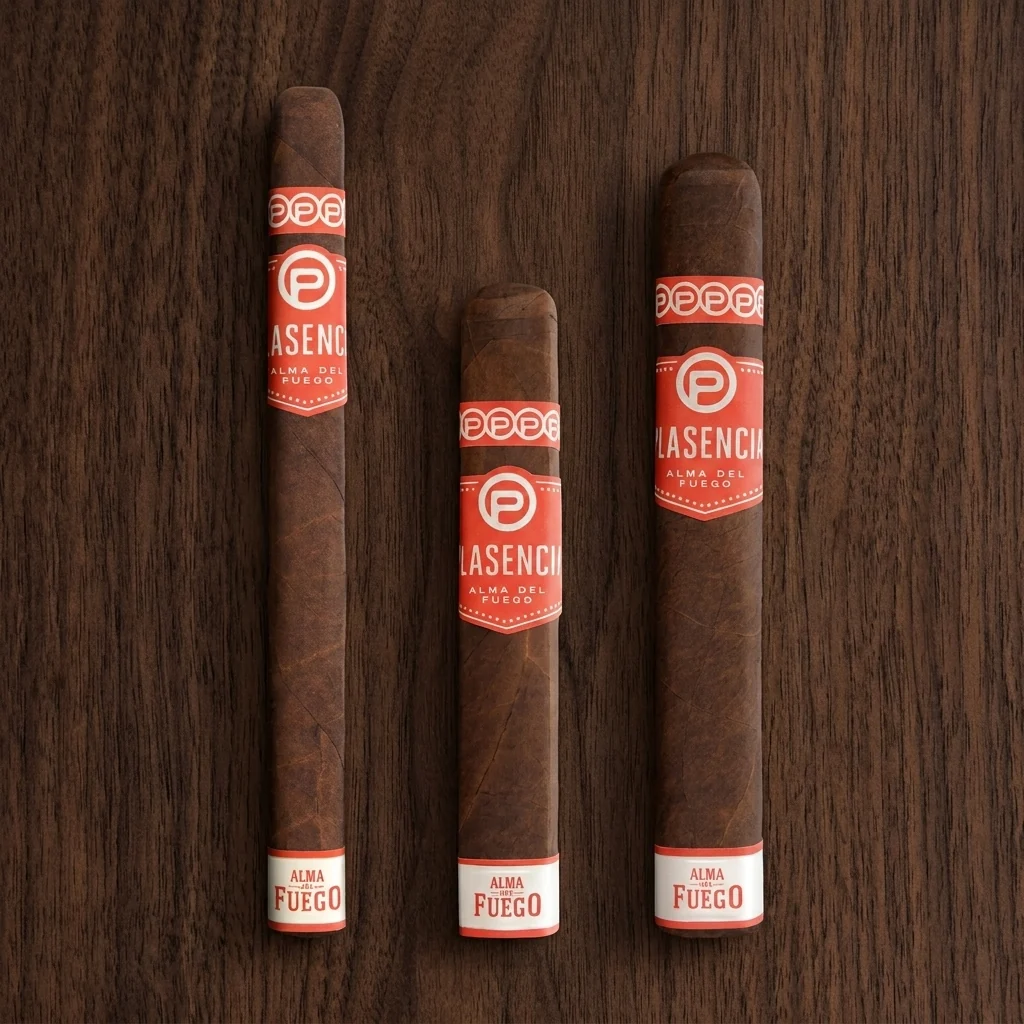
The ring gauge number measures the cigar’s diameter in sixty-fourths of an inch. A 50-ring cigar is 50/64 of an inch across. A 60-ring cigar is 60/64 of an inch across. The higher the number, the thicker the cigar.
Ring gauge is only one part of cigar size. Length is measured in inches, so a cigar listed as 6 × 52 is six inches long with a 52 ring gauge.
How cigar ring gauge is measured
The ring-gauge system divides one inch into 64 equal parts. You can convert the gauge to inches by dividing it by 64, or to millimeters by multiplying it by 0.4.
| Ring gauge | Fraction of an inch | Inches | Millimeters |
|---|---|---|---|
| 38 | 38/64 | 0.59 | 15.1 |
| 42 | 42/64 | 0.66 | 16.7 |
| 46 | 46/64 | 0.72 | 18.3 |
| 50 | 50/64 | 0.78 | 19.8 |
| 52 | 52/64 | 0.81 | 20.6 |
| 54 | 54/64 | 0.84 | 21.4 |
| 60 | 60/64 | 0.94 | 23.8 |
You don’t need to memorize the conversions. Remember that the ring number represents thickness, not circumference, strength, or quality.
Ring gauge in millimeters
One ring is 1/64 of an inch, or about 0.4 millimeters. Multiply the ring gauge by 0.4 for a close estimate of the diameter in millimeters: a 50 ring is about 20 mm across.
Cuban cigars are sized with a metric length and a standard ring gauge. Habanos lists the Cohiba Robustos as 124 mm long with a 50 ring gauge, which is just under 5 inches. Some shops, mostly in Europe, also give the diameter in millimeters. To turn millimeters back into a ring gauge, multiply by 2.5, so 19.8 mm is a 50 ring. For length, one inch is 25.4 mm, so a 6 inch Toro is about 152 mm long.
How to read cigar dimensions
Cigar dimensions are normally written as length by ring gauge:
- 5 × 50: five inches long and 50/64 of an inch in diameter.
- 6 × 52: six inches long and 52/64 of an inch in diameter.
- 7 × 47: seven inches long and 47/64 of an inch in diameter.
The dimensions are more dependable than the size name. One brand’s Toro may be 6 × 50, while another may use 6 × 52 or 6¼ × 54. Both can be sold as Toros.
Common cigar ring gauges
| Ring gauge | Common shapes | What to expect |
|---|---|---|
| Under 40 | Lancero, Panetela | Slender and focused. The wrapper does more of the talking, and construction has to be precise. |
| 40 to 47 | Petit Corona, Corona, Lonsdale | The traditional range. Balanced, and changes in the wrapper are easy to taste. |
| 48 to 54 | Robusto, Toro, Churchill | The comfortable middle, with room for a complex filler blend. |
| 56 to 60 | Gordo, Grande | More filler tobacco and a wider mouthfeel. |
| Above 60 | Oversized formats, from 64 up to 70 and beyond | Needs a wide cutter, an even light and time for a longer smoke. |
Shop by ring gauge: 38 · 42 · 44 · 46 · 48 · 50 · 52 · 54 · 56 · 58 · 60 · 64 · 70
Many cutters top out around a 60 ring. For bigger cigars, use one built for them, like the Vertigo Big Boy (up to 64) or the XIKAR Xi80 and Palio Basta 80 (both up to 80).
Does ring gauge change cigar flavor?
Yes. A cigar is a blend of wrapper, binder, and filler. Changing the diameter changes how much filler can fit inside and alters the proportion of the outer leaves to the filler blend.
A thinner version often gives the wrapper and binder a larger role relative to the filler. A thicker version gives the blender more room for filler leaves and can shift the balance toward the internal blend. The same cigar line in Lancero, Robusto, and Gordo sizes may therefore taste noticeably different.
This doesn’t mean thin cigars are always stronger in flavor or thick cigars are always smoother. The blender may adjust the filler recipe for each vitola. Construction, tobacco, smoking pace, and shape still matter.
Does a larger ring gauge burn cooler?
A larger ring gauge generally has more burning tobacco spread across a wider foot and can feel cooler when smoked patiently. A thin cigar concentrates the ember into a smaller diameter and can become hot when puffed too frequently.
Pace can override the size advantage. Any cigar will become hot and bitter if you smoke it aggressively. A thick cigar also needs a complete, even light across its wider foot. Use our guides to lighting a cigar evenly and maintaining the right smoking pace.
Does a bigger ring gauge mean a stronger cigar?
No. Ring gauge doesn’t tell you the blend’s nicotine strength. A 38-ring Lancero can be full strength, and a 60-ring Gordo can be mild.
A larger cigar contains more tobacco overall, but the type and proportion of that tobacco determine the cigar’s character. Check the maker’s strength description instead of using size as a shortcut. Our cigar strength vs. flavor guide explains the difference between nicotine impact, body, and tasting notes.
How ring gauge affects smoking time
Length usually has the clearest connection to smoking time, but ring gauge matters too. A thick cigar contains more tobacco and often burns longer than a thin cigar of the same length.
Don’t choose by dimensions alone when your schedule is limited. Tobacco density, construction, pace, and outdoor conditions change the total time. Treat published smoking times as estimates.
Thin vs. thick cigars
| Characteristic | Thinner ring gauge | Thicker ring gauge |
|---|---|---|
| Feel | Slender and focused | Broader mouthfeel |
| Blend proportion | More wrapper and binder relative to filler | More room for filler leaves |
| Temperature | Can heat quickly when rushed | Often cooler when smoked patiently |
| Lighting | Smaller foot to ignite | Wider foot requires an even light |
| Cutting | Fits most cutters easily | May require a large-capacity cutter |
Neither is better. My own go-to is a 50 ring, but the useful question is whether the size supports the experience you want.
What ring gauge is best for a beginner?
A ring gauge around 46 to 52 is a practical starting range. It’s comfortable for many smokers, easy to cut with standard tools, and common in Robusto and Toro formats.
A 5 × 50 Robusto is especially approachable when you want a manageable smoking time. A 6 × 50 or 6 × 52 Toro gives the blend more time to develop. Choose the strength separately from the size.
For every common size side by side, from the Small Panatela to the Gigante, see our cigar size chart.
The practical answer
Ring gauge is the cigar’s diameter measured in sixty-fourths of an inch. A higher number means a thicker cigar. Ring gauge can change blend proportions, temperature, mouthfeel, and smoking time, but it doesn’t tell you whether the cigar is strong or high quality.


