
Common Beginner Cigar Mistakes and How to Avoid Them
Most early cigar problems come from rushing, cutting too deeply, poor storage, or choosing more strength than the occasion calls for. Every one of them is avoidable.
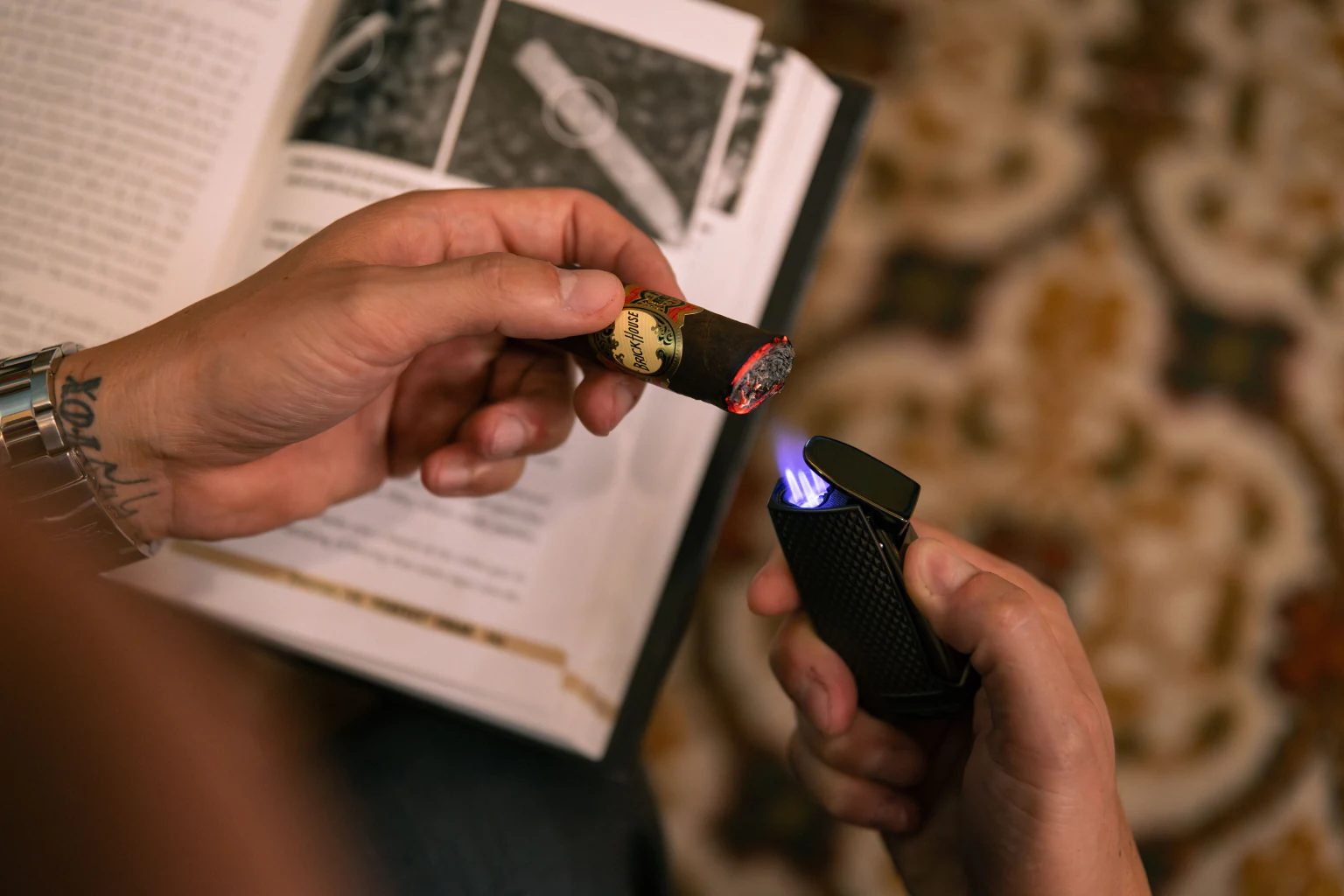
Common beginner cigar mistakes include inhaling the smoke, cutting below the cap, putting the foot directly in the flame, puffing too quickly, and storing cigars without humidity control. Beginners also tend to choose by wrapper color or reputation instead of selecting a strength, size, and smoking time that fit them.
You don’t need to memorize a complicated ritual. Start with a properly stored cigar, make a conservative cut, light it patiently, and smoke it slowly. The rest comes with experience.
1. Inhaling cigar smoke
Premium cigar smoke is traditionally drawn into the mouth, tasted, and exhaled. It isn’t inhaled into the lungs like cigarette smoke. Inhaling can cause coughing and increases direct exposure of the lungs to smoke.
Not inhaling doesn’t make cigar smoking safe. Cigars contain nicotine and harmful chemicals, and exposure occurs even when smoke remains in the mouth. The CDC states that using any commercial tobacco product is unsafe.
2. Cutting too much from the cap
The cap holds the wrapper around the head of the cigar. Cutting below the shoulder can remove that support and cause the wrapper to unravel.
Use a sharp cutter and remove a thin section just above the cap line. Start shallow, test the unlit draw, and cut a tiny amount more only if needed. See our complete beginner’s cigar-cutting guide for straight cuts, V-cuts, punches, and pointed shapes.
3. Scorching the foot with the flame
A torch lighter produces intense heat. Placing the tobacco directly in the flame can char the wrapper and make the first puffs taste burnt.
Hold the foot near the flame, rotate the cigar, and toast the outer edge before drawing. Finish the light with short, gentle puffs and inspect the foot for dark areas. Our guide to lighting a cigar walks through the complete process.
4. Smoking the cigar too quickly
Repeated puffs increase the cigar’s temperature. The smoke can become hot, dry, bitter, or charred even when the blend started smoothly.
Take one or two gentle puffs and let the cigar rest. Roughly 45 to 60 seconds is a useful starting interval, but watch the cigar instead of the clock. If it feels hot, wait longer. If it begins fading, puff a little sooner rather than harder.
5. Choosing a cigar only by wrapper color
A dark wrapper may look strong and a pale wrapper may look mild, but color isn’t a reliable strength scale. The filler makes up most of the tobacco, and the complete blend determines the cigar’s nicotine impact, flavor, and balance.
Ask about the cigar’s overall strength and flavor profile. A dark cigar can be smooth and approachable, while a lighter-looking cigar can carry more strength than expected. Our guide to wrapper, binder, and filler explains what each component contributes.
6. Starting with too much strength
A famous full-bodied cigar may sound like the most exciting first choice, but strength can overpower a new smoker before there’s time to notice the flavor. A mild-to-medium cigar in a manageable size is easier to learn from.
That doesn’t mean every beginner must smoke only mild cigars. Jay started with fuller-bodied cigars. The point is to know what you’re choosing and avoid treating intensity as proof of quality.
7. Smoking without enough time
A cigar should not be rushed to fit a short break. Smoking faster to finish on schedule overheats the tobacco and works against the reason most people enjoy a cigar in the first place.
Choose the size for the time available. A small corona or robusto is often a better decision than a large toro, Churchill, or oversized ring gauge when the schedule is tight. You can always stop early, but planning the right size makes the experience more relaxed.
8. Storing cigars without humidity control
Cigars react to their environment. Tobacco that becomes too dry can burn quickly and crack. Tobacco kept too wet can draw tightly, burn poorly, or develop storage problems.
Use a humidor or a clean airtight container with a reliable two-way humidity pack. Don’t leave premium cigars loose in a room, refrigerator, or hot car. Buy from a retailer that takes storage seriously. We keep ours in controlled storage and ship every order with a humidity pillow so they arrive in the shape they left in.
9. Constantly correcting the burn
A slightly uneven burn line doesn’t always require a lighter. Cigars are handmade from natural leaves, and small variations can correct themselves as the cigar progresses.
Give a minor wave time before touching it up. Correct the burn when one side is clearly falling behind or an unlit section remains. Apply brief heat only to the slow area instead of relighting the entire foot.
10. Knocking the ash off constantly
Cigar ash can remain attached longer than cigarette ash, and it helps insulate the ember. You don’t need to tap the cigar after every puff.
Let the ash build naturally, then roll it gently into an ashtray before it becomes unstable. Don’t hold the cigar over clothing, furniture, or food just to see how long the ash can grow.
11. Chasing flavor notes too aggressively
You aren’t doing anything wrong if you taste tobacco, wood, pepper, or simply “cigar” on your first few smokes. Specific notes develop as your palate gains references.
Focus first on broader questions. Is the cigar creamy or dry? Sweet or earthy? Mild or intense? Does the flavor change? Is the finish pleasant? There’s no test to pass and no required list of tasting notes.
12. Forcing yourself to finish
A cigar doesn’t need to be smoked to the band or down to your fingertips. Stop when the flavor becomes unpleasant, the heat becomes uncomfortable, or you’ve simply had enough.
If you feel lightheaded, nauseated, sweaty, or unwell, stop smoking immediately. Sit somewhere safe and don’t continue for the sake of finishing the cigar. Seek medical help if symptoms are severe or don’t improve.
A simple first-cigar checklist
- Choose an approachable strength and a size that fits your available time.
- Use a properly stored cigar.
- Cut only a thin section above the shoulder.
- Toast the foot without burying it in the flame.
- Take gentle puffs and don’t inhale.
- Let the cigar rest between draws.
- Stop if the cigar or your body is telling you to stop.
For help choosing that first cigar, read our beginner’s guide to premium cigars. It covers strength, size, buying, storage, cutting, lighting, and what to expect at a cigar shop.
The practical answer
Most beginner mistakes come from rushing or trying to prove something. Choose a cigar that fits you, cut less than you think, light it slowly, and give it room between puffs. Ask questions when you need help. A good cigar shop should make the process feel welcoming, not intimidating.
Health note: Information about nicotine, inhalation, and cigar-smoke exposure was checked against the CDC’s cigar guidance.


