How Cigars Are Made: From Tobacco Seed to Finished Cigar
A premium cigar takes years of agricultural work and skilled hands. Here’s the process from tobacco seed and curing through fermentation, rolling, aging, and boxing.
How cigars are made is a much longer story than rolling a few tobacco leaves together. A premium cigar begins as a tiny seed and passes through growing, harvesting, curing, fermentation, aging, sorting, blending, rolling, inspection, and more aging before it reaches a retailer’s humidor.
Each stage affects the finished cigar. A mistake in the field, curing barn, fermentation room, rolling room, or storage environment can change the burn, draw, aroma, and flavor. Understanding the process makes it easier to appreciate why two cigars that look similar can smoke very differently.
How cigars are made, step by step
- Tobacco seeds are planted and raised into seedlings.
- The young plants are transferred to tobacco fields.
- Mature leaves are harvested in stages.
- The leaves are cured in barns.
- The cured tobacco is fermented.
- The leaves are aged, sorted, and prepared.
- Blenders select the wrapper, binder, and filler.
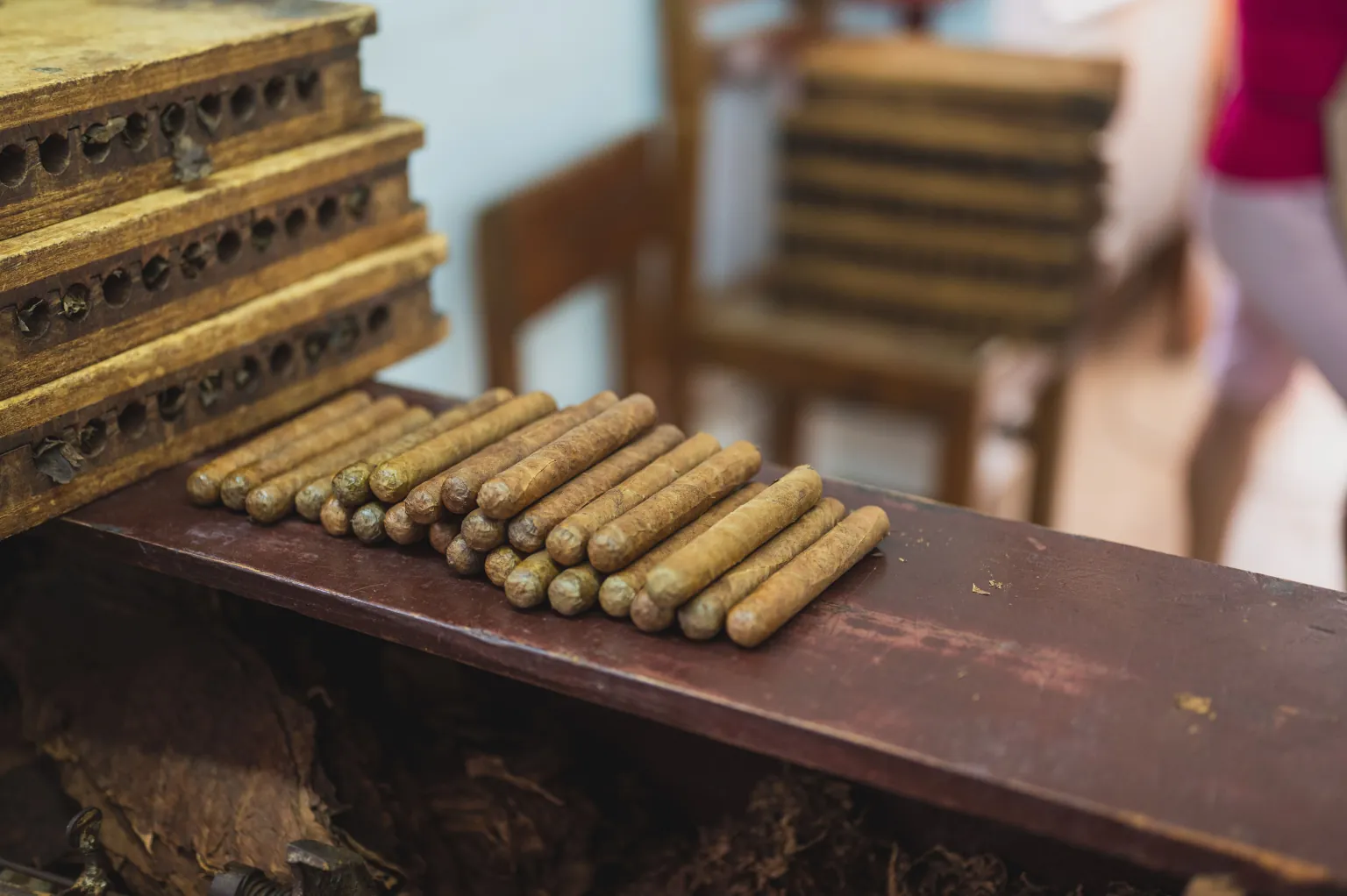
- Skilled workers bunch and roll each cigar.
- The cigars are inspected, tested, and rested.
- Finished cigars are sorted, banded, boxed, shipped, and stored.
The details vary between countries, farms, factories, and manufacturers, but this is the basic process behind most handmade premium cigars.
1. Growing cigar tobacco
Cigar tobacco begins with seeds so small that a large number can fit on the tip of a finger. The seeds are usually started in protected beds or greenhouses where growers can control moisture and protect the young plants.
Once the seedlings are established, the healthiest plants are transferred to fields. Soil, sun, rainfall, temperature, wind, seed variety, and farming decisions all influence the tobacco that develops. This is one reason tobacco from Nicaragua, the Dominican Republic, Honduras, Ecuador, and other growing regions can have recognizable characteristics.
Some tobacco is grown under direct sunlight. Other tobacco, especially certain wrapper leaf, may be grown beneath shade cloth. Shade changes how the plant develops and can produce thinner, more delicate leaves suited for wrappers.
Growers may remove the flowers from tobacco plants so more of the plant’s energy goes into leaf development. They also monitor the fields for disease, insects, weather damage, and uneven growth.
2. Harvesting leaves by priming
Tobacco leaves don’t all mature at the same time. Many premium-cigar crops are harvested through primings, meaning workers remove a few leaves at a time as they become ready.
Leaves closer to the bottom of the plant generally receive less sunlight and tend to be thinner and milder. Leaves higher on the plant receive more sun and often become thicker, stronger, and richer. You may see terms such as volado, seco, viso, and ligero used to describe leaf positions or functional roles, although terminology can vary by country and producer.
A blender can combine leaves from different primings to manage combustion, aroma, body, flavor, and strength. Strong tobacco alone doesn’t make a complete blend. A cigar must also stay lit, draw correctly, and remain balanced.
3. Curing cigar tobacco
Freshly harvested tobacco is green and contains far too much moisture to be rolled into a cigar. The leaves are taken to curing barns and hung or arranged so they can lose moisture gradually.
During curing, the leaves change from green to shades of yellow and brown. Growers manage airflow and humidity to keep the process moving without drying the tobacco too quickly or allowing it to rot.
Curing isn’t the same as fermentation. Curing primarily dries the leaf and begins important chemical changes. Fermentation comes later and uses controlled heat and moisture to further transform the tobacco.
4. Fermenting the tobacco
After curing, tobacco is commonly gathered into piles or stacks that allow natural heat to build. Workers monitor the temperature and periodically turn or rebuild the piles so the fermentation remains controlled.
Fermentation helps reduce harshness and unwanted compounds while developing aroma, color, and flavor. Thick, powerful leaves may require more fermentation than delicate leaves. Wrapper tobacco also needs careful handling because appearance matters as much as performance.
This stage can’t simply be rushed by adding excessive heat. Poorly managed fermentation can damage valuable tobacco. Experienced producers rely on observation, temperature control, moisture management, and repeated sorting.
5. Aging, sorting, and preparing the leaves
After fermentation, tobacco may rest in bales for extended periods. Aging allows the tobacco to continue settling and developing before it becomes part of a blend.
Age is useful, but older doesn’t automatically mean better. Tobacco must have enough structure and character to benefit from additional time. The quality of the crop, fermentation, storage, and intended blend all matter.
Before rolling, leaves are sorted for factors such as size, texture, color, condition, strength, and intended purpose. Dry tobacco is too brittle to handle, so it’s carefully rehumidified until it becomes pliable enough to work with.
6. Creating the cigar blend
A traditional premium cigar has three primary components:
- Filler: the tobacco in the center of the cigar.
- Binder: the leaf that holds the filler together.
- Wrapper: the finished outer leaf.
The blender chooses tobaccos that work together, not merely a collection of individually strong or flavorful leaves. The filler may combine several origins, seed varieties, and primings. The binder needs enough strength and elasticity to hold the bunch. The wrapper must look appealing, burn properly, and complement the blend.
Our guide to long filler vs short filler cigars explains one of the most important construction differences.
7. Bunching the filler and binder
For a handmade long-filler cigar, a buncher arranges the filler leaves so air can travel through the cigar while the different tobaccos burn together. The leaves can’t simply be packed into a tight tube. Their placement influences the draw and combustion.
The buncher surrounds the filler with the binder leaf, creating an unfinished cigar called a bunch. Consistency matters. Too much tobacco can create a tight draw. Too little can produce a loose draw, fast burn, or soft spots.
8. Molding and pressing the bunch
The bunches are placed into molds that establish the cigar’s shape and dimensions. The filled molds are pressed, then commonly opened and rotated so pressure is applied evenly and obvious seams don’t develop.
Round cigars and box-pressed cigars require different finishing decisions, but both depend on a consistent bunch underneath the wrapper.
9. Applying the wrapper and cap
A roller selects and trims a wrapper leaf, often using a curved knife called a chaveta. The wrapper is stretched smoothly around the bunch in an overlapping spiral.
The roller finishes the head with a cap made from tobacco leaf and a small amount of natural adhesive. This cap helps secure the wrapper and creates the area the smoker will later cut.
Wrapper application is highly visible, but appearance isn’t the only measure of skill. The finished cigar still needs proper tension, an open draw, a secure cap, and an even structure from head to foot.
10. Quality control
Factories use different quality-control systems, but common checks include length, ring gauge, weight, appearance, firmness, color, and draw resistance. Cigars with damaged wrappers, inconsistent dimensions, or construction problems may be rejected or separated.
Draw-testing equipment can help identify cigars that are too tight or too open before they’re finished. Some manufacturers also smoke samples from production to evaluate consistency.
11. Resting and aging finished cigars
Freshly rolled cigars aren’t always ready for immediate shipment. The tobaccos have been rehumidified and handled during production, so finished cigars commonly rest in controlled rooms.
This period allows moisture to stabilize and the different components of the blend to settle together. The required time depends on the manufacturer, blend, production schedule, and desired result.
12. Sorting, banding, and boxing
Before packaging, cigars may be sorted by wrapper color so the cigars within a box look consistent. Bands are applied carefully, and the cigars are arranged in boxes, bundles, jars, or other packaging.
The band doesn’t improve the cigar, but presentation matters in premium-cigar production. The final package also needs to protect the cigars during storage and transportation.
What happens when cigars reach the retailer?
The manufacturing process can be excellent and the cigar can still suffer if it’s mishandled afterward. Retailers must maintain appropriate temperature and humidity, inspect their inventory, rotate stock, and protect cigars during shipping.
This final stage is easy to overlook because it happens after the factory has completed its work. At Cigar Grail, proper humidification is treated as part of the product, not an optional extra. Online cigar orders are shipped with humidity protection so the cigars have a better chance of arriving in the condition the manufacturer intended.
If you’re new to premium cigars, start with our beginner’s guide to premium cigars. You can also learn how growing location influences tobacco in our guide to cigar regions.
More than a rolled tobacco leaf
A premium cigar represents years of agricultural work, fermentation, aging, blending, skilled rolling, quality control, and careful storage. That doesn’t mean every expensive cigar will suit your taste, but it explains why well-made cigars require time and attention long before anyone lights one.
The more you understand the process, the easier it becomes to recognize the differences between blends and appreciate the work behind a consistently good cigar.