Wrapper, Binder, and Filler Explained: The Parts of a Cigar
A premium cigar is built from three working parts. Understanding what each one does makes blend descriptions much easier to read.
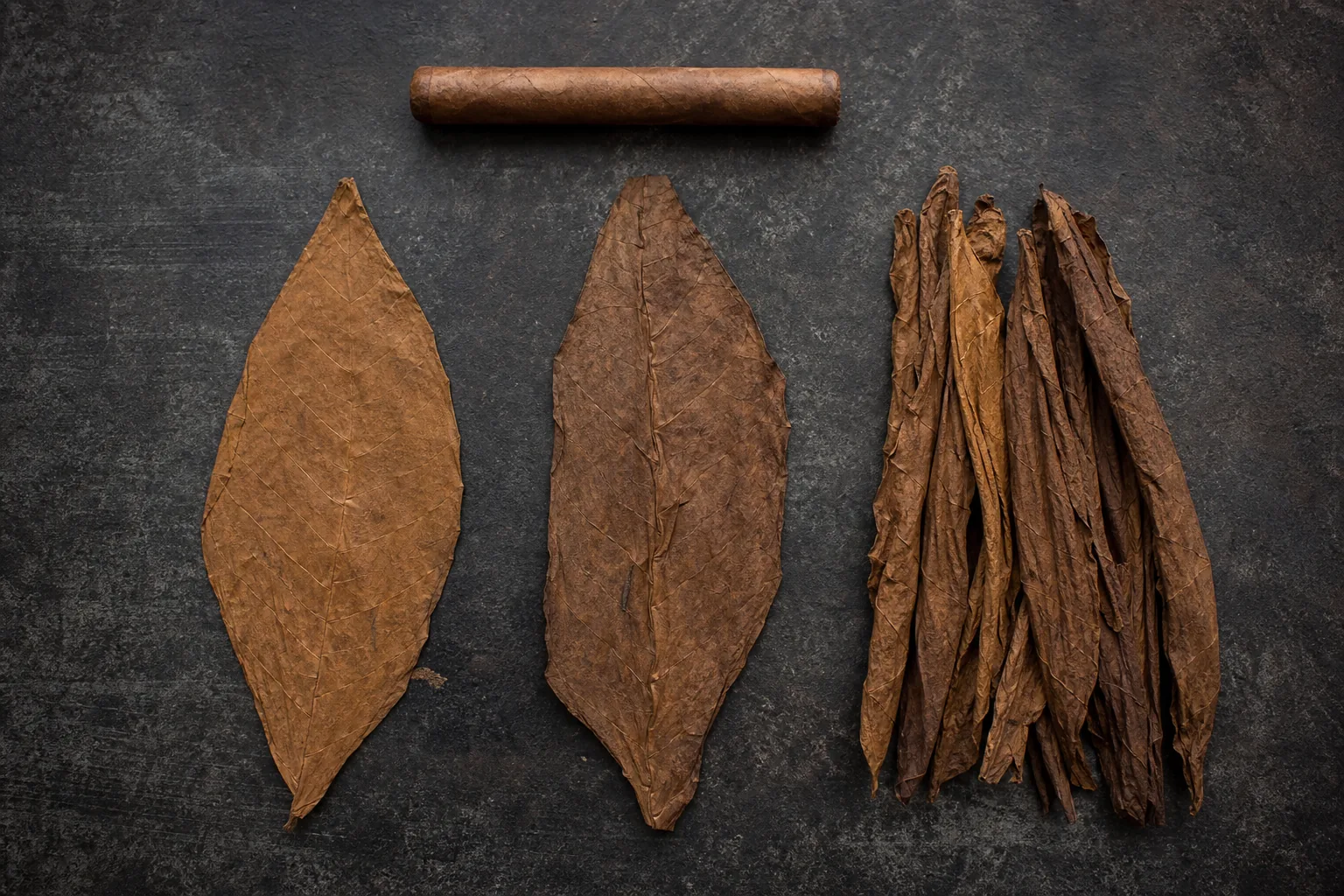
Wrapper, binder, and filler are the three tobacco components of a premium cigar. The filler forms the center of the cigar and provides most of its physical volume. The binder holds that filler together. The wrapper is the carefully selected outer leaf that finishes the cigar.
All three influence how a cigar burns and tastes. The wrapper is important, but it doesn’t work alone. A cigar described only by its wrapper leaves out the binder, the filler blend, and the way the entire cigar was fermented, aged, and constructed.
The three parts at a glance
| Part | Where it’s | Main job | What matters |
|---|---|---|---|
| Wrapper | Outside | Finishes and protects the cigar | Aroma, texture, combustion, appearance, and flavor contribution |
| Binder | Under the wrapper | Holds the filler bunch together | Strength, elasticity, burn, and structural support |
| Filler | Center | Creates the body of the cigar | Blend balance, strength, airflow, burn rate, and flavor development |
What is a cigar wrapper?
The wrapper is the outermost tobacco leaf. It’s the part you see and touch, so manufacturers select wrapper leaves for appearance as well as smoking characteristics. A wrapper must be thin and flexible enough to roll around the cigar without cracking, yet strong enough to stay intact during handling and smoking.
Wrapper leaves are sorted for color, texture, veins, elasticity, and condition. The visible leaf may contribute aroma, sweetness, spice, earth, cocoa, cedar, or other characteristics, depending on the seed, growing region, curing, fermentation, and aging.
Connecticut Shade, Habano, Corojo, Cameroon, Connecticut Broadleaf, and Mexican San Andrés are familiar wrapper descriptions, but they don’t tell you everything about strength or flavor. They identify an important part of the blend, not the whole blend.
What is a cigar binder?
The binder sits directly beneath the wrapper. Its job is to hold the filler bunch in shape before the wrapper is applied. Binder tobacco doesn’t need the flawless appearance expected from a wrapper, but it needs enough strength and elasticity to keep the cigar together.
The binder also affects combustion and flavor. A binder that burns poorly can work against the rest of the blend, while a well-chosen binder supports an even burn and complements the filler and wrapper.
Some blends use one binder leaf and others use two. When a manufacturer lists a double binder, it usually means the cigar needs additional structure or the blender wants the combustion and flavor contributed by both leaves.
What is cigar filler?
The filler is the tobacco inside the cigar. In a long-filler premium cigar, several whole leaves are folded and arranged so air can move through the bunch. The exact combination is the core of the blend.
Filler leaves can come from different tobacco plants, primings, farms, regions, countries, and crop years. A blender may combine tobacco for strength, aroma, sweetness, combustion, texture, and the way the profile develops from the first third to the final third.
Interactive flavor map
See what each growing country tastes like
Tap a country on the flavor map to see its top flavors, strength and body.
The amount and placement of filler also affect construction. Too much tobacco can restrict the draw. Too little can create a loose draw and fast burn. The roller needs to build a bunch that holds its shape while leaving consistent air channels.
Our guide to long-filler and short-filler cigars explains how whole leaves differ from smaller tobacco pieces.
Does the wrapper create most of the flavor?
You will often see a fixed percentage assigned to the wrapper’s flavor contribution. I would not use a universal number. The wrapper-to-filler ratio changes with ring gauge, and different tobaccos can be mild, assertive, aromatic, or neutral in different blends.
A thin cigar has more wrapper surface relative to the amount of filler inside it, so the wrapper can feel more prominent. A large-ring cigar contains more filler, giving the internal blend more room to influence the profile. Even then, combustion and blending matter more than a simple formula.
I enjoy Connecticut Broadleaf and Mexican San Andrés wrappers, but I still judge the complete cigar. A favorite wrapper can’t rescue filler that’s unbalanced, a binder that burns poorly, or construction that restricts the draw.
Does a dark wrapper mean a strong cigar?
No. Wrapper color isn’t a dependable strength scale. A dark wrapper may look powerful and a pale wrapper may look mild, but nicotine strength depends on the tobacco throughout the cigar, especially the filler blend.
Dark color can result from tobacco variety, sun exposure, fermentation, and processing. It may suggest certain flavor expectations, but it doesn’t tell you how much nicotine impact the complete blend will deliver.
How the three parts work together
A cigar isn’t three independent layers. The filler must burn at a rate the binder and wrapper can support. The binder must hold the bunch without choking airflow. The wrapper must stay intact and burn with the rest of the cigar.
The blender is balancing flavor and construction at the same time. A leaf that tastes interesting but burns poorly may need another tobacco to support it. A powerful filler may need a smoother wrapper or binder to keep the cigar balanced. A beautiful wrapper may be wrong for the blend if its combustion doesn’t match the tobacco underneath it.
This is why two cigars using the same wrapper can taste completely different. Different binders, fillers, proportions, origins, fermentation, aging, sizes, and rolling methods change the result.
How to read a cigar blend description
- Start with the wrapper, but treat it as one clue rather than the final answer.
- Check the binder for additional origin and construction information.
- Read the filler countries or tobaccos to understand how broad the internal blend may be.
- Look at strength separately. Don’t infer nicotine strength from wrapper color.
- Confirm the size. The same blend can present differently in another length or ring gauge.
If the terminology is new, our guide to premium cigars for beginners covers the rest of the fundamentals. You can also see where these components enter production in how cigars are made.
The practical answer
The wrapper is the outer leaf and an important source of aroma, flavor, combustion, and appearance. The binder is the structural leaf that holds the filler together and helps the cigar burn. The filler is the internal blend that creates most of the cigar’s volume and much of its strength, airflow, and progression.
Learn all three, then judge the cigar as a complete blend. That approach is more useful than choosing only by wrapper name or color.