How to Light a Cigar: A Beginner’s Step-by-Step Guide
A good light starts the entire cigar evenly without scorching the tobacco. Take your time, toast the foot first, and let the heat, not the flame, do most of the work.
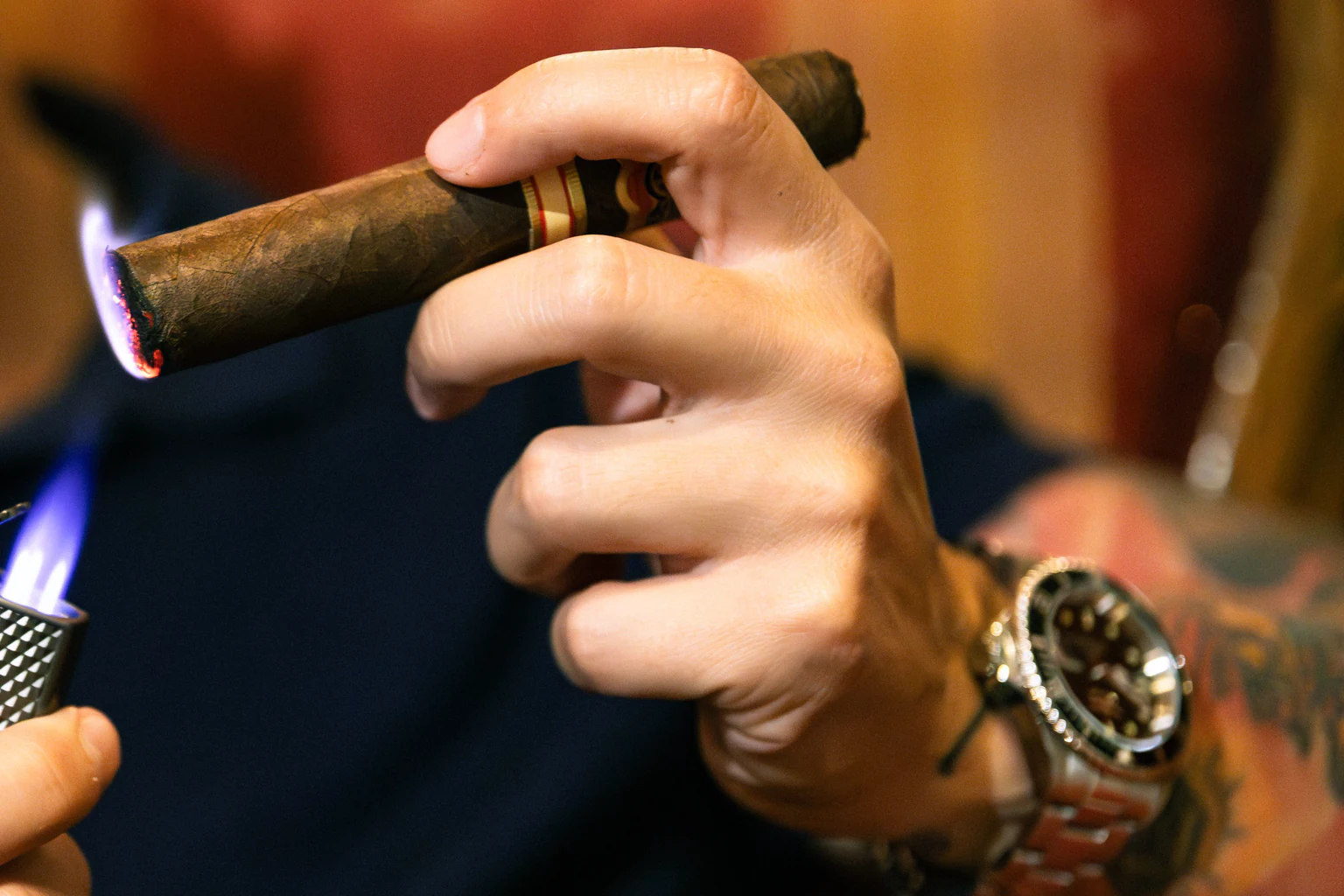
How to light a cigar correctly is simple once you separate the process into two stages. First, hold the foot near the flame and rotate the cigar until the tobacco is evenly toasted. Then take a few gentle puffs while continuing to rotate it until the entire foot glows.
Don’t bury the cigar in the flame or rush to create a large cloud of smoke. Direct contact can char the wrapper, overheat the filler, and give the first inch a harsh or bitter start.
Know which end to light
Light the foot of the cigar. The foot is the open end where you can see the filler tobacco. The opposite end is the capped head, which you cut and place in your mouth.
If the head is still closed, cut it before lighting. This gives you a chance to test the draw and make sure air moves through the cigar. Our guide to cutting a cigar shows where to cut and how to avoid damaging the wrapper.
What should you use to light a cigar?
Butane torch lighter. A torch produces a concentrated, wind-resistant flame. It’s fast and especially useful outdoors or with larger ring gauges. Keep the hottest part of the flame away from the tobacco because a torch can scorch a cigar quickly.
Soft-flame butane lighter. A soft flame provides gentler heat and makes it easier to see the foot while you rotate the cigar. It takes a little more patience but is an excellent option indoors.
Long wooden matches. Matches work well when you let the sulfur on the match head burn away before bringing the flame near the cigar. A large cigar may require more than one match. Don’t sacrifice an even light just to finish with a single match.
Cedar spill. A thin strip of Spanish cedar can be lit first and then used as a soft, movable flame. It’s traditional and useful when you want more distance between the fuel source and the cigar.
Avoid candles, gasoline lighters, and strongly scented fuels. Their odors can interfere with the cigar. If you use a refillable lighter, choose refined butane intended for that lighter and follow the manufacturer’s instructions.
How to light a cigar step by step
- Cut the capped head. Make a clean, conservative cut and test the unlit draw.
- Hold the cigar in your hand. Keep the foot where you can see it clearly.
- Bring the flame close without touching. Position the heat just beneath the foot.
- Rotate the cigar slowly. Warm the entire outer edge instead of concentrating on one spot.
- Toast the foot. Continue until the rim is evenly darkened and beginning to glow.
- Bring the cigar to your mouth. Take short, gentle puffs while rotating the cigar over the heat.
- Inspect the foot. Blow lightly across it or hold it where you can see whether the glow reaches the entire circle.
- Touch up only the dark areas. Apply brief heat to any section that did not ignite, then begin smoking slowly.
The goal isn’t to make the foot look black. You want an even orange-red glow across the filler with no large unlit section. A careful light usually needs fewer corrections later.
What does it mean to toast the foot?
Toasting means warming the exposed tobacco before you draw through the cigar. The heat begins igniting the outer edge and helps the different leaves at the foot start together.
Hold the flame close enough for the heat to reach the tobacco, but don’t let the flame sit directly against the wrapper. Rotate the cigar so one side doesn’t ignite far ahead of the other. With a strong torch, use more distance and shorter bursts.
How to tell whether the cigar is evenly lit
After the first few puffs, look at the foot. The center and outer edge should glow when you draw. A dark patch usually means that section needs a brief touch-up.
Don’t chase a perfectly straight burn line after every puff. Small differences often correct themselves. Intervene when a section of the foot never ignited or one side is clearly falling behind.
Torch lighter vs. soft flame
| Lighting tool | Best use | Beginner caution |
|---|---|---|
| Single-flame torch | Precise lighting and touch-ups | Keep it away from the wrapper to avoid scorching |
| Multi-flame torch | Large ring gauges and outdoor conditions | Produces intense heat very quickly |
| Soft flame | Gentle indoor lighting | Requires more time and rotation |
| Wooden matches | Traditional lighting without a lighter | Let the sulfur burn away and use more than one if needed |
A single-flame torch is the most versatile option if you learn to control the distance. A soft flame is more forgiving but slower. The best lighter is the one that lets you see the foot, rotate the cigar comfortably, and apply heat with control. You can find both styles in our cigar accessories.
Common cigar-lighting mistakes
Putting the cigar directly in the flame. This can scorch the wrapper and create a harsh start.
Lighting only the center. The wrapper, binder, and filler should begin burning together. Rotate the cigar and include the outer edge.
Puffing too hard during lighting. Strong, repeated draws generate excess heat. Use short, gentle puffs.
Holding a torch too close. The visible blue flame is extremely hot. Increase the distance and let the heat reach the tobacco.
Ignoring an unlit section. A large dark patch at the beginning can develop into an uneven burn. Correct it before settling into your smoking pace.
How to relight a cigar
If the cigar goes out for a short time, tap away loose ash and gently blow through the cigar to clear stale smoke. Toast the exposed tobacco again, then take a few light puffs while rotating it.
A cigar that has been sitting for a long time may taste stale or sharp when relit. There’s no obligation to finish it. If the flavor no longer improves after a careful relight, let it go out.
The practical answer
Cut the cigar first, hold the foot just above the flame, and rotate it slowly. Toast the outer edge before taking a few gentle puffs to complete the light. Inspect the foot, correct any dark section, and then slow down. A controlled light should feel patient, not dramatic.