Cigar Regions: Where Cigar Tobacco Grows and How It Tastes
Nicaragua, the Dominican Republic, Honduras, Cuba and the wrapper countries, with the actual valleys the leaf comes from, how each one tends to taste, and cigars on our shelves that show it off.

A cigar region is the place the tobacco was grown, which isn’t always where the cigar was rolled. A Nicaraguan cigar can wear a wrapper from Ecuador, Mexico or Connecticut, and that wrapper changes the smoke a lot. Learn a handful of regions and you can guess a cigar’s style before you light it.
Three countries make almost every premium cigar sold in the US. In 2025, Nicaragua shipped 258.4 million of the 429.8 million premium cigars imported here, about 60 percent, followed by the Dominican Republic at 93.7 million and Honduras at 74.5 million, according to Cigar Aficionado’s import report. Most of the other places on this list are known for one leaf, usually the wrapper.
Cigar regions at a glance
| Region | Main growing areas | Known for |
|---|---|---|
| Nicaragua | Estelí, Condega, Jalapa, Ometepe | Bold filler and wrapper; pepper, earth, espresso |
| Dominican Republic | Cibao Valley around Santiago | Piloto Cubano filler, Olor binder; creamy, nutty |
| Honduras | Jamastrán Valley, Talanga, Copán | Corojo; earthy, woody, leathery |
| Cuba | Vuelta Abajo, Semi Vuelta, Partido, Remedios | All three leaves; not sold in the US |
| Mexico | San Andrés Valley, Veracruz | Dark maduro wrapper; cocoa, espresso |
| Ecuador | Cloud covered wrapper farms | Connecticut, Habano and Sumatra seed wrappers |
| Connecticut, USA | Connecticut River Valley (CT and MA) | Shade wrapper (mild) and Broadleaf (dark) |
| Pennsylvania, USA | Lancaster County | Broadleaf binder and filler; earthy, sweet |
| Brazil | Bahia and Arapiraca, Alagoas | Mata Fina and Arapiraca maduro leaf |
| Cameroon | Cameroon and Central African Republic | Thin, toothy wrapper; cedar, sweet spice |
See how every region tastes, on one map
Tap a country to see its top flavors, strength and body. Put two side by side, like Nicaragua against the Dominican Republic, or answer five quick questions and we’ll match you to a region and a cigar we carry.
Nicaragua
Nicaragua is the biggest name in premium cigars right now. It passed the Dominican Republic as the top supplier to the US in 2016 and still holds that spot. Most of its tobacco grows in three northern valleys and on one volcanic island.
Estelí. Hard, dark soil and lots of sun. It’s known for strong, hearty leaf, especially ligero, the thick leaves from the top of the plant that bring the power.
Condega. Just north of Estelí, with more cloud cover. The leaf tends to be earthy, with some sweetness and spice. Plasencia grows the high altitude tobacco in its Alma del Cielo at Finca San Julián in Condega, more than 3,500 feet up.
Jalapa. Up near the Honduran border, with very fertile soil. Jalapa tobacco is usually smoother and sweeter, and a lot of good wrapper comes from here.
Ometepe. A volcanic island in Lake Nicaragua. Its leaf is sweet and earthy, like Jalapa’s, but with more strength.
Put together, Nicaraguan tobacco runs medium to full, with black pepper, earth, espresso and cocoa, plus a darker sweetness like dried fruit or molasses. When a cigar hits hard and rich, there’s a good chance there’s Nicaraguan leaf in it.
At the shop, Nicaragua and the Dominican Republic are the two countries customers ask about most. I enjoy both, and each has its own character: Nicaraguan tobacco tends to be bolder and stronger, while Dominican tobacco tends to be creamier and smoother.
Try: My Father Le Bijou 1922, a Nicaraguan puro (every leaf from one country); Plasencia Alma del Cielo, with a Jalapa wrapper and Condega leaf inside (read our review); and Joya de Nicaragua Cuatro Cinco, also in Jalapa wrapper. Browse all Nicaraguan cigars.
Dominican Republic
The Dominican Republic led US premium cigar shipments for years before Nicaragua took over, and it’s still a solid second. Most of its tobacco grows in the Cibao Valley in the north, around the city of Santiago, in areas like Navarrete, La Canela and Villa González.
Two kinds of tobacco matter most there. Piloto Cubano is a Cuban seed leaf that’s rich and intense, used mostly as filler to give a blend its backbone. Olor Dominicano is the native type, a smaller, thinner leaf with great aroma and an even burn, which is why it so often ends up as the binder.
Dominican cigars are known for a refined, approachable profile: toasted nuts, light cedar, gentle baking spice and a soft sweetness like honey. A lot of them run mild to medium, but the country makes full bodied cigars too, so don’t treat mild as a rule.
If you’re new to cigars, the Dominican Republic is where I’d start you.
Try: Ashton Classic, Dominican filler and binder under a Connecticut Shade wrapper; Arturo Fuente Chateau Natural, with a Dominican Olor binder; and La Galera Imperial Jade, with Piloto Cubano in the filler. Browse all Dominican cigars.
Honduras
Honduras is third in US shipments, and it grew 11 percent in 2025. The Jamastrán Valley, in the south near the Nicaraguan border, is its largest growing area, and the nearby town of Danlí is the center of Honduran cigar making. Jamastrán is also the traditional home of Corojo, a Cuban seed tobacco. Smaller areas include the Talanga Valley, north of the capital, and the hills around Santa Rosa de Copán in the west.
Honduran tobacco tends to taste traditional and grounded: a sturdy core of earth and wood, with oak, leather and toasted bread carried by a warm, steady spice. Strength usually sits around medium to medium full.
In my opinion, Honduran tobacco is underrated, and it’s been gaining popularity lately.
Try: Plasencia Cosecha 149, a Honduran puro, and Oscar 2012 Corojo, in Honduran Corojo wrapper. Our Plasencia Triunfal review covers a Jamastrán wrapper made in Danlí. Browse all Honduran cigars.
Cuba
Cuba built the reputation every other country on this list is chasing, and plenty of the seed grown elsewhere traces back to it. Habanos, the Cuban state cigar company, lists four premium growing zones.
Vuelta Abajo. In Pinar del Río province, at the western end of the island. It’s the most famous zone and the only one that grows wrapper, binder and filler. Habanos says all the filler and binder in its long filler cigars comes from here.
Semi Vuelta. Also in Pinar del Río, growing mostly filler and binder for short filler cigars.
Partido. Known for wrapper leaf.
Remedios. Also called Vuelta Arriba, in the center of the island, and the oldest tobacco growing area in Cuba.
Here’s the catch if you live in the US. Cuban cigars can’t be sold here because of the trade embargo, and since September 24, 2020, travelers can’t bring them home for personal use either, according to the Treasury Department. That’s why you won’t find them on our shelves.
If you want that style anyway, Atabey is usually the first thing I hand someone who asks if we carry Cubans. It’s rolled in Costa Rica, and my Atabey Brujos review explains why it scratches the itch.
Mexico: San Andrés
Mexico’s cigar tobacco comes mostly from the San Andrés Valley in the state of Veracruz, set among a small range of volcanic peaks called the Sierra de los Tuxtlas near the Gulf coast. The Turrent family has grown tobacco there since 1880.
The star is San Andrés Negro, a tough, dark leaf harvested by cutting the whole stalk. It stands up to the long, heavy fermentation that makes a maduro, which is why so many maduro wrappers are Mexican. (Maduro just means the wrapper was fermented longer until it turned dark, which usually brings out sweetness.)
The usual profile is dark earth and natural sweetness, with cocoa, espresso and a molasses depth, and the smoke tends to feel thick. It isn’t always sweet, though. The Foundation Olmec Maduro goes savory, with cocoa and hardly any sugar, while the La Aroma de Cuba Mi Amor has been my dessert cigar for years.
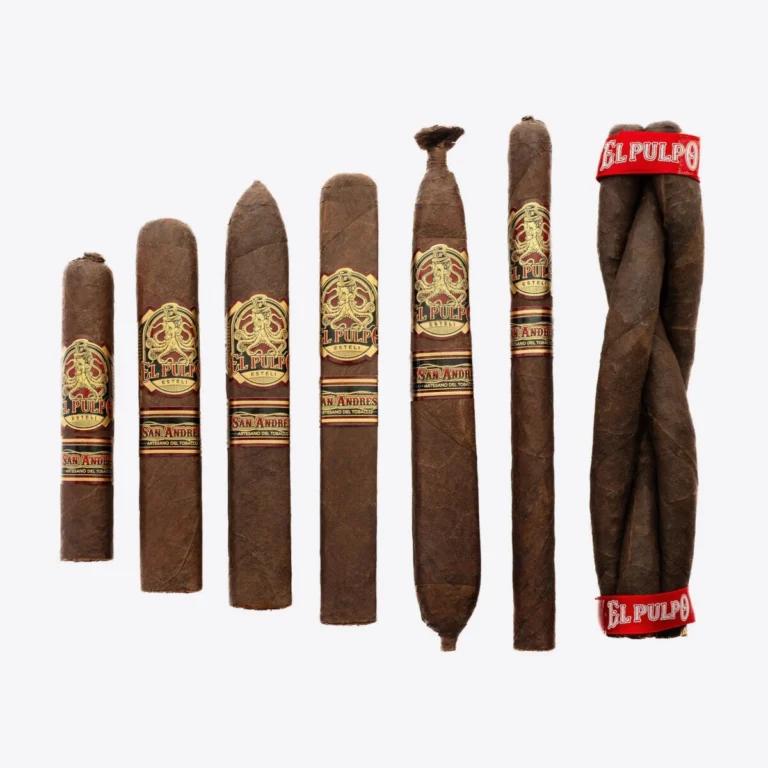
Try: the Olmec Maduro (review), the Mi Amor (review), and El Pulpo, whose Eel lancero is my number one lancero. Browse San Andrés wrapper cigars.
Ecuador
Ecuador grows wrapper, and a lot of it. The farms sit under steady cloud cover that filters the sun, which does naturally what the shade tents in Connecticut do by hand, and the result is smooth, thin wrapper leaf. You’ll see three kinds on our shelves.
Ecuador Connecticut. Grown from Connecticut seed. It’s a touch paler and drier than the real thing, with cream, nuts and a little white pepper.
Ecuador Habano. Grown from Cuban seed, and probably the most used wrapper in premium cigars today. Depending on how it’s cured and fermented, it can run from medium and sweet to bold and spicy.
Ecuador Sumatra. Grown from Sumatra seed, usually darker than Ecuador Connecticut with more spice.
Try: My Father Connecticut (Ecuador Connecticut), Brick House Classic (Ecuador Habano) and Ashton VSG (Ecuador Sumatra).
Connecticut Shade (USA)
Connecticut Shade grows in the Connecticut River Valley, which runs north from Hartford across the line into Massachusetts. Since about 1900, farmers there have grown it under cheesecloth tents that filter the sun, so the plants stretch tall and the leaves come out thin and silky.
It’s the classic pale wrapper on mellow cigars: creamy, toasty and lightly nutty, with a soft hay sweetness. It’s about as easy to smoke as a cigar gets, which is why it’s a go to for morning cigars and newer smokers.
Try: Ashton Classic and Brick House Double Connecticut, which puts a Connecticut Shade wrapper over a Connecticut Broadleaf binder. Browse Connecticut Shade cigars.
Broadleaf (Connecticut and Pennsylvania)
Broadleaf is Connecticut Shade’s darker, tougher cousin. It grows in the same valley, but out in full sun with no tents, and the whole plant is cut at the stalk at harvest. The leaf is thick and veiny and takes heavy fermentation well, so it’s one of the classic maduro wrappers.
Pennsylvania grows its own broadleaf in Lancaster County, much of it on Amish farms. It’s used more as binder and filler than wrapper, and it brings a rustic, earthy sweetness.
Expect dark chocolate, espresso, earth and brown sugar or molasses, with a heavy, coating feel. Dark doesn’t mean strong, either: the Ashton Aged Maduro wears black Connecticut Broadleaf and still smokes mild to medium. Our guide to cigar strength vs flavor explains why.
Try: Ashton Aged Maduro (review), Arturo Fuente Maduro and AJ Fernandez Last Call Maduro, in Pennsylvania Broadleaf wrapper. Browse Connecticut Broadleaf or Pennsylvania Broadleaf cigars.
Brazil
Brazil’s cigar tobacco comes from the northeast of the country. Mata Fina grows in the Recôncavo, a strip of land near the coast in Bahia, and it’s naturally sweet and earthy with a little spice. Arapiraca, from around the town of Arapiraca in Alagoas, is a heavier sun grown leaf that can cure almost black. Both take fermentation well, so you mostly see them on maduros.
Brazilian leaf adds a cocoa richness and dark fruit like raisin or fig, with an earthy sweetness underneath.
Try: Brick House Maduro (Arapiraca), Drew Estate Java (Mata Fina) and Highclere Castle Edwardian, which uses Mata Fina as the binder.
Cameroon
Cameroon wrapper comes from two countries in central Africa, Cameroon and the Central African Republic. It’s thin and fragile, which makes it hard to roll, and it often shows tooth: tiny bumps on the leaf that are little pockets of oil and flavor.
It’s valued for fragrance and a warm spice that feels more like baking spice than straight pepper. Think cedar and sweet wood with cinnamon or nutmeg, and sometimes a subtle raisin sweetness.
The Arturo Fuente Hemingway is the easiest way to taste it. Our Hemingway Best Seller review calls it the one we’d hand a first timer and a 20 year smoker both.
Try: Arturo Fuente Hemingway Natural and La Galera Imperial Jade, Cameroon over Dominican Piloto Cubano. Browse Cameroon wrapper cigars.
Other regions worth knowing
Indonesia. Sumatra and Java grow wrapper, binder and filler, but most of it goes into machine made cigars in Europe. The Sumatra seed now grown in Ecuador and Central America started here. Try the Romeo y Julieta 1875 Mini, in Indonesian Sumatra wrapper.
Costa Rica. A small player, well under one percent of US premium imports, but home to Tabacos de Costa Rica in Puriscal, where Atabey and Byron are rolled. Browse Costa Rican cigars.
Italy. Toscano cigars use Kentucky tobacco, a dark variety that came to Italy from the US in the early 1800s. It’s grown mostly in Tuscany and fire cured over wood, which gives Toscanos their smoky, rustic character. Try the Toscano Classico or Toscanello, or browse Italian cigars.
How to use regions when you shop
Treat the wrapper as the first impression and the binder and filler as the foundation. The wrapper shapes the aroma and the opening flavors, while the tobacco inside drives the strength, body and finish. Our guide to wrapper, binder and filler goes deeper, and how cigars are made covers what happens to the leaf after harvest.
From there, match regions to what you’re in the mood for:
- Creamy and smooth: Connecticut Shade, Ecuador Connecticut, or a Dominican blend
- Bold and peppery: Nicaraguan, especially Estelí leaf
- Earthy and classic: Honduran
- Dark and sweet: San Andrés, Broadleaf or a Brazilian maduro
- Aromatic spice: Cameroon
- Smoky and different: an Italian Toscano
Regions won’t tell you everything, since blending and fermentation matter just as much, but they’ll usually steer you the right way, especially when you’re shopping online and can’t smell the leaf. For more of the basics, see our Smoker’s Guide.