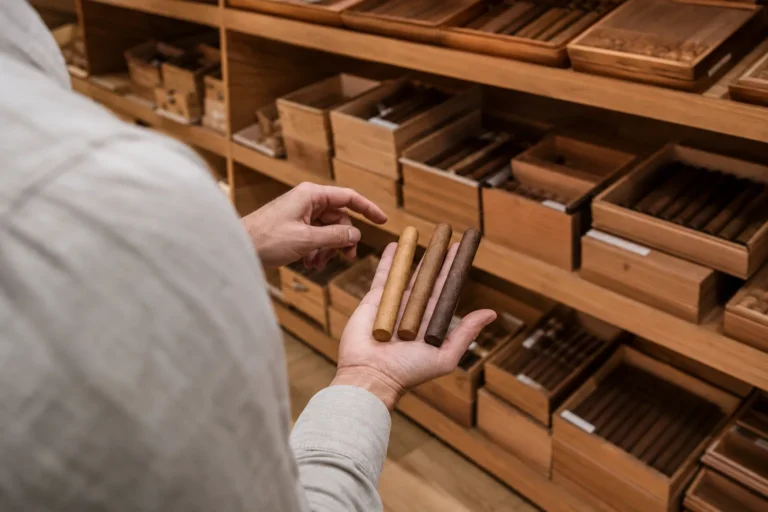
Handmade vs. Machine-Made Cigars: What’s the Difference?
The difference is bigger than who rolled the cigar. Construction, filler tobacco, consistency, price, and the kind of experience you want all matter.
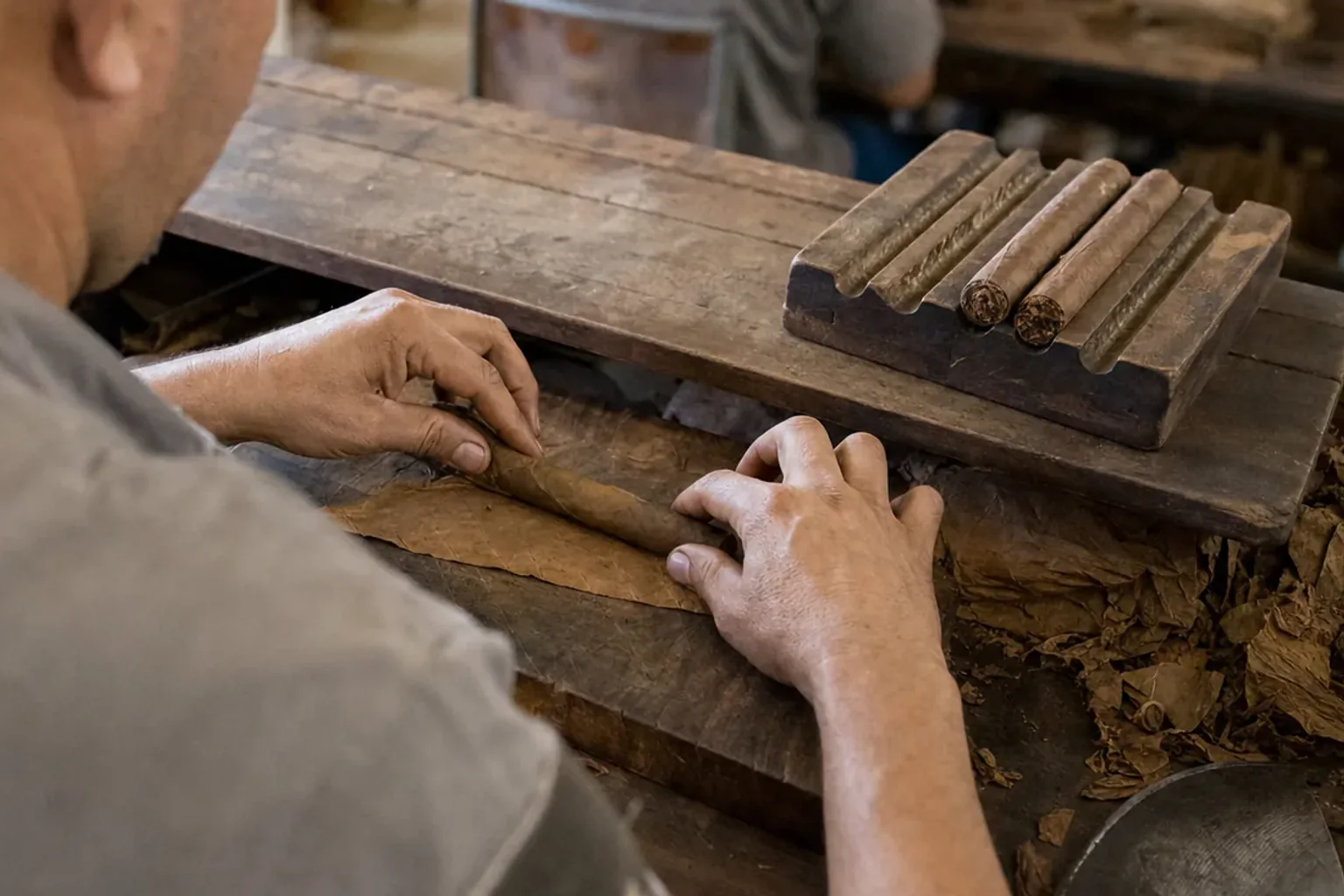
Handmade vs. machine-made cigars is mainly a difference in construction and materials. A handmade premium cigar is assembled by skilled rollers, usually with long-filler tobacco, a natural binder leaf, and a natural wrapper leaf. A machine-made cigar is produced with automated equipment and commonly uses short-filler tobacco or reconstituted tobacco components.
That doesn’t mean every handmade cigar is excellent or every machine-made cigar is bad. Machines can produce remarkable uniformity, while a poorly rolled handmade cigar can still have draw or burn problems. The useful question isn’t which label sounds more impressive. It’s which construction fits the experience, price, and smoking time you want.
The difference at a glance
| Feature | Handmade premium cigar | Machine-made cigar |
|---|---|---|
| Assembly | Bunched, bound, and wrapped by hand | Produced mostly or entirely by automated equipment |
| Typical filler | Long-filler whole leaves | Short, chopped, or processed filler |
| Binder and wrapper | Usually natural tobacco leaves | May use natural leaf or reconstituted tobacco sheet |
| Consistency | Small handmade variation is normal | Very consistent size and construction |
| Price | Usually higher because of labor, tobacco selection, and aging | Usually lower because production is faster and more automated |
| Best fit | A slower, more layered premium-cigar experience | An inexpensive, consistent, casual smoke |
How a handmade cigar is constructed
A handmade cigar begins with filler leaves selected for the blend. The buncher folds and arranges those leaves to create airflow through the cigar, then wraps the bunch in a binder leaf. The cigar is placed in a mold and pressed so it holds the intended shape.
A roller then applies the wrapper leaf, trims the foot, and forms the cap at the head. The work looks simple when an experienced roller does it, but the amount of tobacco in the bunch, the direction of each leaf, and the tension of the wrapper all affect how the cigar draws and burns.
Our guide to how cigars are made follows the entire process from growing and curing tobacco through fermentation, blending, rolling, resting, and boxing.
How a machine-made cigar is constructed
Machine-made cigars use equipment to form, bind, wrap, cut, and finish cigars at a much faster rate. The exact process varies. Some cigars are made almost entirely by machine, while others are machine-bunched and finished with a wrapper applied by hand.
Many machine-made cigars use short filler, meaning smaller pieces of tobacco rather than whole leaves running the length of the cigar. Some use homogenized or reconstituted tobacco leaf for the binder, wrapper, or both. This material is made from tobacco that has been processed into a consistent sheet.
The result is a cigar that can be made quickly and consistently. That consistency is useful, but it’s a different construction goal from a handmade long-filler cigar.
Why filler tobacco matters
Manufacturing method and filler type often overlap, but they aren’t identical terms. Most handmade premium cigars use long filler. Most mass-market machine-made cigars use short filler. Hybrid methods also exist, so the description on the box or product page matters.
Long filler gives a blender control over the placement of different leaves and how they burn together from one end of the cigar to the other. Short filler is easier to portion mechanically and can make an affordable, consistent cigar.
For a closer look at what is inside each construction, read our comparison of long-filler and short-filler cigars.
How construction changes the smoking experience
Draw and burn. A well-rolled handmade cigar should have enough airflow to stay lit without feeling loose. Because it’s made by hand, minor variation between cigars is possible. A machine can repeat the same bunch density very consistently, although the filler and materials still affect how the cigar burns.
Flavor development. Premium long-filler blends can place different tobaccos together so the balance changes as the cigar burns. That doesn’t guarantee complexity, but it gives the blender more control over how whole leaves interact. Machine-made short-filler cigars are often designed for a more direct and uniform profile.
Smoking time. Handmade premium cigars are commonly made for a slower smoking pace. Machine-made cigars and cigarillos are often smaller or use filler that burns more quickly, making them practical when the goal is a shorter, casual smoke.
Price. Handmade cigars require skilled labor, careful leaf selection, and multiple quality-control steps. Machine production reduces labor per cigar and makes lower price points possible. Price still varies with tobacco, brand, packaging, taxes, and production scale.
Can you tell the difference by looking?
Not reliably. A machine-made cigar can look clean and uniform, while a handmade cigar can show small color or shape variations. A natural wrapper can have visible veins, and a perfectly smooth surface doesn’t prove better tobacco.
Check the manufacturer’s description or ask the retailer. Terms such as handmade, long filler, short filler, mixed filler, machine bunched, hand finished, natural leaf, and homogenized tobacco leaf tell you more than appearance alone.
Which type should a beginner choose?
I recommend that a beginner try a properly stored handmade premium cigar first. It gives you a better reference point for the construction, draw, pacing, and flavor development people mean when they talk about premium cigars.
You don’t need an expensive or rare cigar. Choose an approachable strength, a manageable size, and a price that lets you relax. Our beginner’s guide to premium cigars explains how to make that first choice.
A machine-made cigar can still make sense when price, portability, consistency, or a short smoking window matters most. The point is to understand what you’re buying instead of assuming the word cigar always describes the same product.
The practical answer
Choose handmade when you want the traditional premium-cigar experience: natural leaf construction, careful blending, skilled rolling, and time to pay attention to how the cigar develops. Choose machine-made when low cost, consistency, and convenience are the priority.
Neither manufacturing method can tell you whether you’ll enjoy a specific blend. Construction sets the foundation. Tobacco quality, storage, balance, strength, and personal taste still decide whether the cigar earns another smoke.